
| 28 May 2026
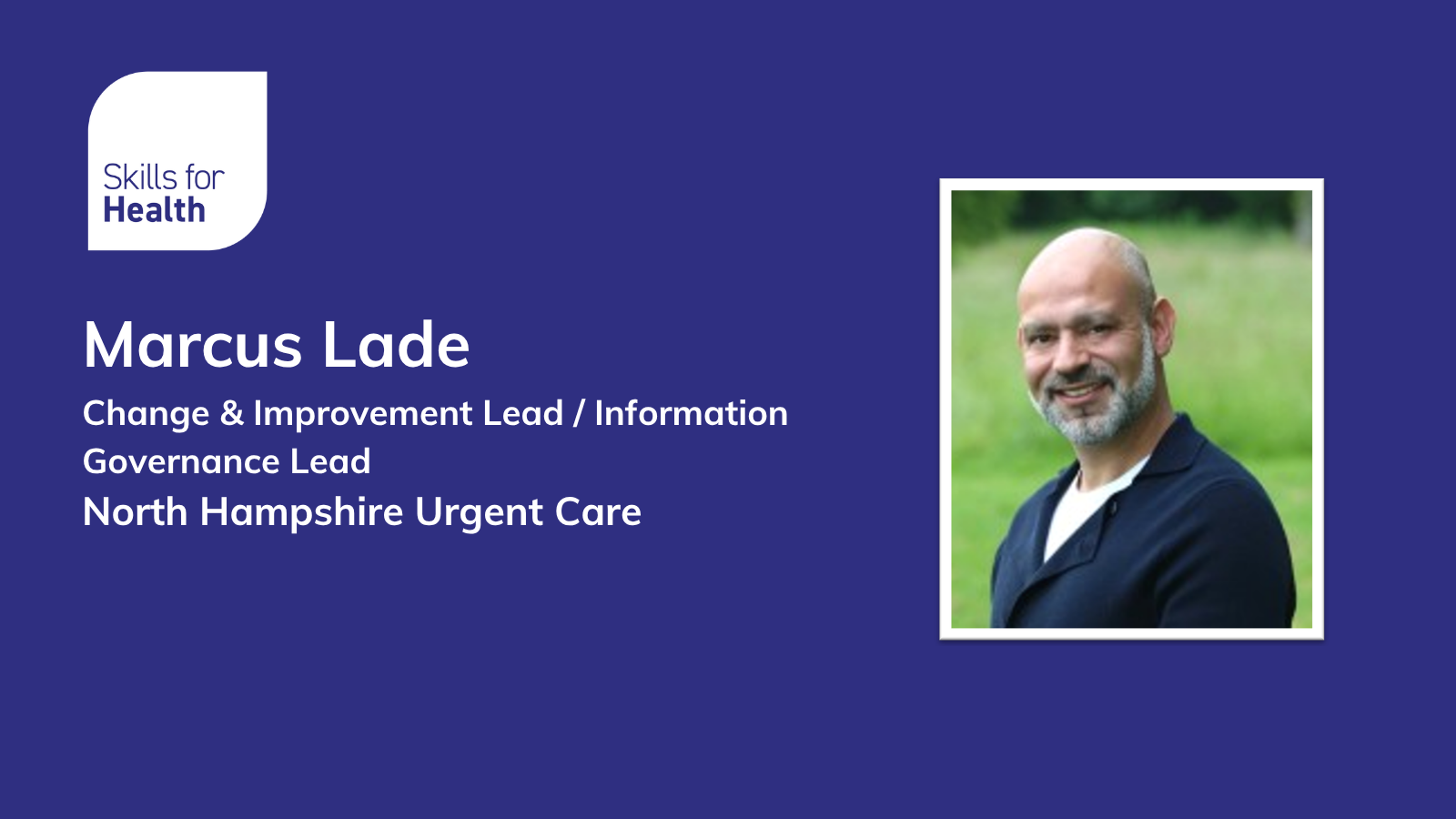
Marcus Lade leads on information governance and change and improvement initiatives for North Hampshire Urgent Care – a not-for-profit provider of primary care and talking therapies services.
Marcus’s role gives him unique insight into the benefits and risks of AI adoption in a healthcare setting and here he shares some of his practical insights with us.
1. In your role, you are responsible for leading change to improve operational efficiency and patient services. How has this shaped your perspective on the adoption of generative AI (GenAI) within healthcare?
Good governance shapes my perspective on GenAI more than anything else. I see its adoption as something that needs to be safe, transparent and aligned to organisational risk appetite. At the same time, my role in driving operational or organisational improvement means I’m supportive of GenAI where it genuinely reduces burden, improves consistency, and strengthens patient services. For me, the value comes from introducing GenAI in a controlled and purposeful way to enhance how we work, whilst avoiding creating new risks inadvertently.
2. When did you first become aware of the potential of GenAI in healthcare, and how is North Hampshire Urgent Care (NHUC) currently using GenAI in practice?
I first recognised the potential of GenAI when I saw how tools like Microsoft Copilot could reduce administrative burden and improve consistency in everyday tasks. At NHUC, we use Copilot within a clear governance framework set out in our AI tools policy, which defines what staff can and cannot do – no patient identifiable data, no clinical decision-making and mandatory human oversight. This approach has enabled us to benefit from GenAI to improve efficiency and support staff, while ensuring safe, transparent, and responsible use across the organisation.
3. Are there any specific GenAI tools or technologies you are using at the moment, and what prompted their adoption?
We are currently using Copilot as our primary GenAI tool. Its adoption was prompted by two factors: first, NHS England’s approval of Copilot for use within the NHS, and second, the reassurance that all data remains securely within our Microsoft 365 tenant. This gives us a safe, contained environment to explore GenAI while maintaining clear boundaries around risk. We also recognise that GenAI adoption is happening across the NHS regardless of formal authorisation, so we have deliberately kept our approach pragmatic and supportive. Any new tools are considered through a vetting process, particularly where they may help staff returning to work.
4. What benefits have you realised so far? Could you share one or two examples of how GenAI has improved processes, outcomes or decision‑making?
We’ve already seen tangible benefits from GenAI. One example is our policy summary template, which Copilot produced, improving consistency and freeing time for higher‑value work. Another is streamlining operational documents, such as refining our complaints and feedback pathways; GenAI has helped turn complex processes into clear, usable outputs. These improvements have reduced administrative burden, sped up decision‑making and supported more reliable governance across NHUC.
5. Alongside these benefits, what challenges or concerns have you encountered when introducing GenAI, for example around data quality, governance, workforce confidence or implementation?
While we’ve seen benefits from GenAI, there are challenges that need active management. The biggest is ensuring staff understand what GenAI can and cannot do. Without that awareness, there’s a risk of people assuming the tools are more capable or safer than they are. We’ve already seen examples across the NHS of staff unintentionally inputting sensitive information into public tools, not realising that the entire prompt becomes available to the model. That risk is why our AI tools policy is so explicit about prohibiting patient‑identifiable or sensitive data and requiring human oversight.
Another challenge is that adoption happening informally. People are naturally curious, and some will experiment with GenAI on personal devices or consumer apps, even when safer organisational options exist. Although we’ve provided clear guidance through our policy, newsletters and awareness campaigns, incident reporting shows that these messages don’t always reach everyone. This highlights the need for ongoing education, not one‑off communication.
We also face governance challenges around data quality and reliability. GenAI can produce convincing but incorrect outputs, so staff need confidence in when it can be used and when it can’t. That’s why we emphasise proportionate use, low‑risk tasks and mandatory human review.
Overall, the challenge isn’t the technology, it’s embedding the right behaviours, controls and understanding so GenAI is used safely, consistently and in line with our organisational risk appetite.
6. You were involved in the development of Skills for Health’s GenAI e‑Learning course. How do you think this will support staff to make informed, safe and confident decisions about using GenAI in their roles?
I believe the Skills for Health GenAI e‑learning will help staff make safer and more confident decisions by focusing on practical steps, sound judgement and good common sense. It highlights the grey areas where risks often arise, such as misunderstanding the limitations of GenAI or entering information into the wrong type of tool. Importantly, it reinforces the need to read local policies and to contact governance teams when unsure. This will give staff the awareness and confidence they need to use GenAI appropriately and safely in their roles.
7. Finally, what advice would you give to other NHS organisations or leaders who are at an earlier stage of exploring or adopting GenAI?
My advice is to keep things simple, safe and purposeful. You don’t need a fully developed strategy before you begin, but you do need good governance from day one. Start by setting clear boundaries: what GenAI can be used for, what it must not be used for, and when staff should stop and ask for guidance.
It’s also important to recognise that adoption will happen organically, whether you formally approve tools or not.
Focus early efforts on low‑risk, high‑value use cases that reduce burden and build confidence. Encourage teams to read local policies, complete training and reach out to governance colleagues when unsure. Above all, treat GenAI as a cultural shift, not a technology project. Organisations that combine good governance with practical, supportive guidance will see the safest and most sustainable benefits.
Build workforce confidence in safe GenAI use
GenAI in Healthcare: Starting Safely is a short, practical eLearning course designed to help healthcare staff understand how to use GenAI tools safely, responsibly and appropriately in workplace settings.
The course explores:
- Safe and unsafe GenAI use
- Data protection and governance considerations
- Human oversight and professional accountability
- Realistic healthcare scenarios and decision-making
Whether you are supporting workforce awareness, developing organisational guidance or beginning your GenAI adoption journey, the course provides practical, sector-specific support for safe implementation.
Explore the course